Paul Rutledge, commercial real estate veteran says “I have seen it before.”
The steep discounts now appearing across the U.S. office market echo a familiar real estate cycle. Over the past two decades, struggling regional malls traded at dramatic discounts as anchor tenants departed, foot traffic declined, and traditional retail formats became obsolete. Many of those properties were ultimately repositioned into apartments, mixed-use developments, healthcare campuses, and entertainment districts. Today, a similar pattern is emerging in the office sector. Aging buildings with declining demand are increasingly being evaluated not for continued office use, but for residential conversion and mixed-use redevelopment. The shift suggests that the market may be entering a new phase—moving from the era of dead malls to the next wave of dead office buildings primed for transformation. “This is the cycle of real estate and technology impacting the bricks and mortar of life.”
Fire-Sale Office Buildings Reveal Deeper Shift in Real Estate Fundamentals
A growing number of office buildings across the United States are trading at steep discounts, in some cases selling for a fraction of their previous values. The dramatic repricing reflects more than a cyclical downturn. Instead, it signals a structural shift in office demand, where location, building functionality, and alternative land uses are determining whether assets retain value or fall into distress. As hybrid work reshapes tenant needs and capital markets remain tight, investors are increasingly evaluating these properties not as office buildings, but as redevelopment opportunities—often with residential conversion as the leading strategy, much like the transformation of obsolete malls into apartment communities. “This had been a mall redevelopment strategy for years when people don’t need another Macy’s or Sears outlet, but more community-based multi-family housing” says Rutledge.
Bad Locations Are Losing Tenant Demand
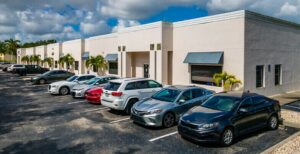
Many of the most heavily discounted office buildings share a common trait: weakening locations. Secondary downtown districts, isolated suburban office parks, and aging central business district blocks without strong amenities are experiencing the sharpest drops in demand. Corporate tenants are consolidating into newer, amenity-rich buildings in prime areas, leaving commodity office space behind. In suburban settings, properties lacking walkability, nearby housing, or retail services have become particularly vulnerable. The result is a widening divide between top-tier assets that remain competitive and lower-tier buildings that struggle to attract tenants at any rent level.
This pattern mirrors the decline of many regional malls located in aging suburban trade areas. As newer lifestyle centers and power centers captured demand, weaker malls lost anchors and foot traffic. Developers eventually repositioned those sites into residential-led mixed-use projects, replacing enclosed retail corridors with apartments, townhomes, and open-air retail. Similarly, struggling office locations are now being evaluated as future residential neighborhoods, where the land can support housing density rather than low-occupancy office use. “You can be sure if you don’t have place-making amenities, that provide entertainment, food and drink options, and landing locations for people, it will have lost its value”.
Inadequate Physical Conditions Drive Functional Obsolescence
Beyond location challenges, many distressed office buildings suffer from physical characteristics that no longer meet modern tenant requirements. Deep floor plates limit natural light, making space less desirable for both office users and residential conversion. Low ceiling heights, outdated mechanical systems, inefficient column spacing, and aging elevator cores further reduce competitiveness. Some buildings also carry excessive parking structures designed for full-time office occupancy, which no longer align with hybrid work patterns. Renovating these structures can require significant capital, often exceeding the building’s remaining economic value.
The same physical limitations accelerated the obsolescence of older enclosed malls. Large anchor boxes left behind by department stores created vast, difficult-to-lease spaces. Interior corridors limited flexibility, and inward-facing layouts disconnected properties from surrounding communities. Many owners concluded that partial demolition and residential redevelopment offered a more viable solution. Former department store boxes were replaced with apartment buildings, while mall parking lots became residential pads. Today’s office conversions follow a similar logic, where outdated floor plates and mechanical systems make full renovation impractical, pushing owners toward residential reuse.
“If you haven’t invested in outdated retail boxes or anchor stores, such as a former Sears or an old office building with low ceilings and lacking modern electrical features … you have no idea about the cost … and don’t ask about the new code requirements…”.
Higher and Better Reuse Is Driving Investment Interest
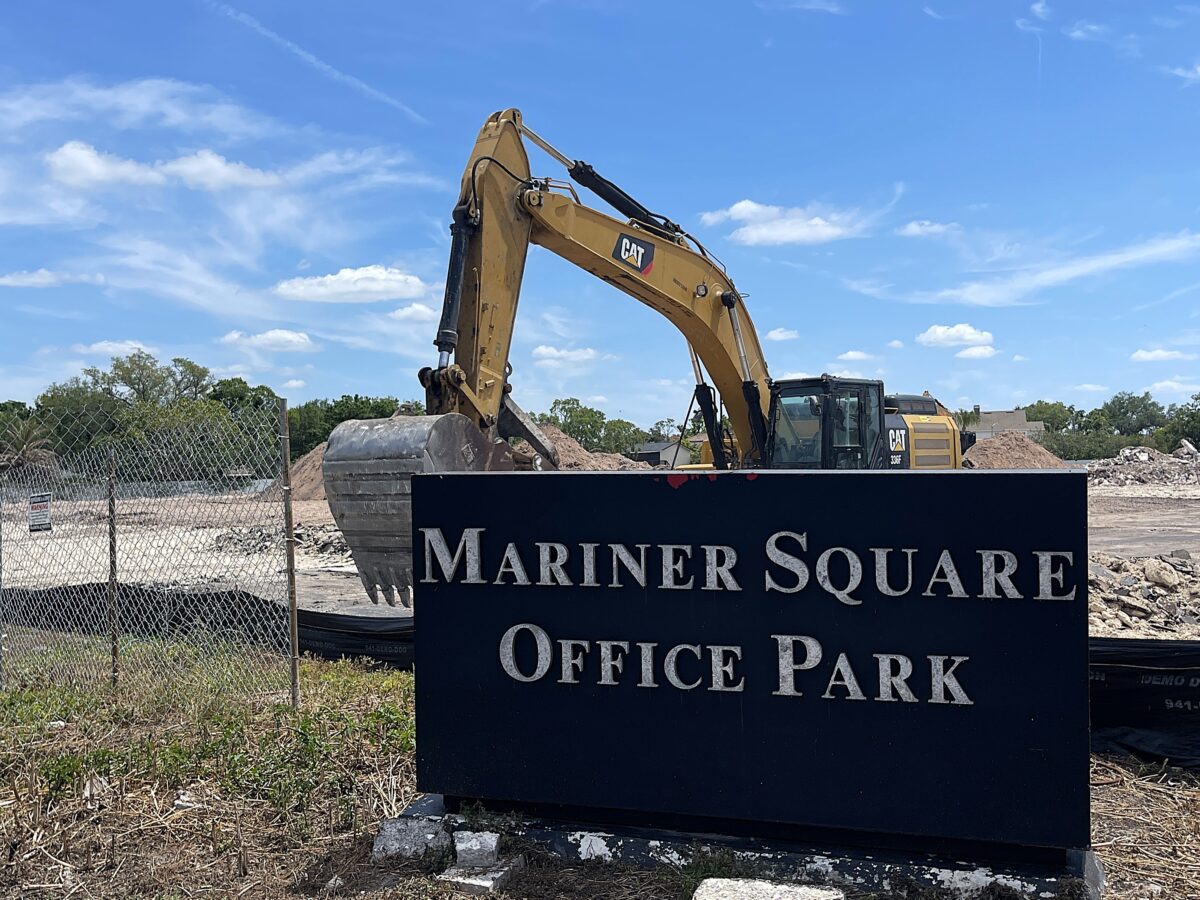
For many buyers, the appeal of distressed office buildings lies in the potential for alternative uses. Investors are pursuing conversions to residential, hospitality, education, and mixed-use developments, while some suburban properties are being evaluated for entirely different land uses. In certain cases, demolition and ground-up redevelopment represent the highest and best use. The pricing of these assets increasingly reflects redevelopment economics rather than office income potential. Buyers are effectively acquiring entitled or repositionable land at discounted prices, with the existing structure viewed as either a conversion candidate or a removal cost.
This mirrors the investment strategy that reshaped distressed malls. Developers acquired underperforming shopping centers at discounted pricing and repositioned them into apartment communities with supporting retail. In many projects, the mall structure was partially removed, retaining only viable portions while introducing residential density. Office investors are now applying the same playbook—evaluating whether an obsolete office tower can be converted into apartments, or whether the site should be redeveloped entirely as residential or mixed-use. “Office operation cost have gone through the roof, with insurance rates, property taxes, and when you look at retro fit costs, it’s best to start over.”, says Rutledge who has brokered malls, office, industrial and multi-family complexes. They also can get locked into capped expenses with long term tenants, and lock out by lenders for deals to carry that cost.
A Market Repricing, Not Just a Downturn
The wave of discounted office sales represents a broader repricing of functionally obsolete real estate. Demand for traditional office space has contracted, while tenant expectations have risen. Buildings that cannot compete on location, amenities, or physical design are losing value rapidly. As financing pressures mount and vacancies persist, more properties are expected to trade at distressed pricing. In this environment, investors are shifting their focus from office fundamentals to redevelopment potential, signaling a long-term transformation in how older office assets are valued and repositioned.
The same repricing occurred during the mall shakeout, when properties once valued as retail income investments began trading based on land value and residential redevelopment potential. As apartments replaced enclosed retail space, values stabilized around new uses rather than legacy formats. A similar transition may now unfold across the office sector, with residential conversion emerging as one of the most consistent end uses.
From Dead Malls to Dead Offices
The progression from struggling malls to obsolete office buildings reflects a broader evolution in how real estate adapts to changing demand. In both cycles, tenant behavior shifted first. Retailers consolidated into dominant centers while weaker malls lost traffic; today, office tenants are concentrating in amenity-rich buildings while commodity space empties out. In both cases, aging assets in secondary locations became increasingly difficult to lease, capital expenditures rose, and ownership transitioned from income-focused investors to redevelopment specialists.
In the mall cycle, apartments frequently became the stabilizing use, bringing permanent population to previously single-use retail sites. That same logic is now shaping office redevelopment, where residential conversion introduces 24-hour activity to underutilized business districts. Former office campuses may evolve into residential neighborhoods, while downtown towers convert into housing. In both scenarios, residential demand replaces declining commercial demand.
The transition from dead malls to dead offices underscores a recurring real estate pattern: when demand changes, buildings designed for a prior era lose relevance, and land value reasserts itself. Investors who recognized the apartment opportunity within struggling malls helped drive the last redevelopment wave. Today, similar opportunities are emerging in obsolete office buildings, suggesting that the next cycle of value creation may once again be defined by converting yesterday’s commercial real estate into tomorrow’s residential communities. “A great example is Casselberry, Florida, where city planners decided against a new downtown office tower, and in its place opted for multi-family housing that tied into the city scape with a walkable art path, an eco-garden, an amphitheater, and City Hall.”
Casselberry is just one example. Across Florida, you may have seen the same type of development shifts.

Paul Rutledge Cell: 941.228.2198 Email: prutledge@lqcre.com |
LQ Commercial | info@lqcre.com | 813.288.0020 | lqcre.com